The Death of the App Store: How AI Is Becoming the Universal Interface
The era of downloading dozens of apps to accomplish simple tasks is ending. AI platforms like ChatGPT are evolving into operating systems where natural language becomes the interface to everything. Here's what the future of apps really looks like.

Remember when your phone's home screen was a grid of colorful icons, each one a separate world you had to enter, learn, and navigate? That era is ending.
We're witnessing something unprecedented: the collapse of the app layer. Not because apps will disappear—they won't—but because the way we access their capabilities is undergoing a fundamental transformation. AI isn't just adding chatbots to existing apps; it's becoming the universal interface through which we interact with all digital services.
The question isn't whether this shift will happen. It's already happening. The question is: what does building software look like in a world where AI is the primary way users accomplish tasks?
The App Store Model Is Fracturing
For over fifteen years, we've lived under the app store paradigm. Need to order food? Download an app. Track your spending? Download an app. Learn a language, book a flight, find a date, meditate, edit photos—download, download, download.
If I survey the average smartphone user around me, each person has 30+ apps installed but regularly uses fewer than 10. The rest sit dormant, occupying storage, occasionally sending notifications, rarely providing value. This is app fatigue, and it's a symptom of a deeper problem.
The app model assumes users want to:
- Discover a standalone product
- Learn its unique interface
- Remember to use it at the right moment
- Context-switch between apps to complete multi-step tasks
But users don't want apps. They want outcomes.
Nobody wakes up thinking, "I can't wait to interact with my calendar app today." They think, "I need to reschedule the dentist and make sure it doesn't conflict with my kid's soccer practice." The app is friction between the user and the goal.
AI as the Universal Interface Layer
Here's the paradigm shift: AI platforms are becoming operating systems, and traditional apps are becoming the services those operating systems invoke.
When you tell ChatGPT, "Find me a flight to Tokyo next week, something with good reviews and a reasonable price," something profound happens. You're not:
- Opening a browser and navigating to a travel site
- Comparing tabs across multiple booking platforms
- Learning each platform's unique filter system
- Manually cross-referencing with your calendar
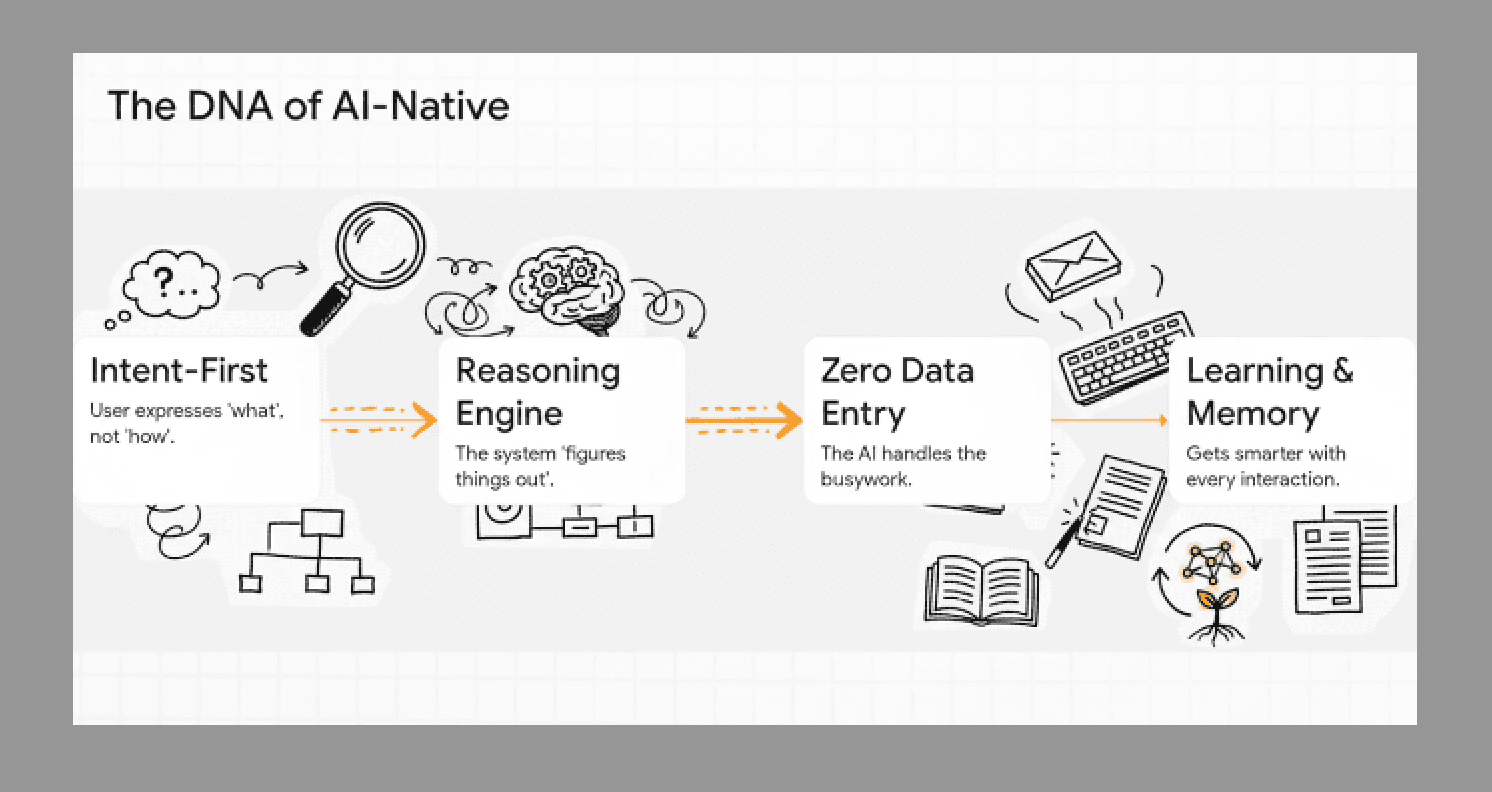
Instead, you're expressing intent in natural language, and the AI orchestrates the underlying services to deliver results. The apps—or more precisely, the capabilities those apps provide—become invisible infrastructure.
This is what Deutsche Telekom's "app-less phone" concept demonstrated: a device where AI handles all tasks through conversation, eliminating the app paradigm entirely. It's not a gimmick. It's a glimpse of the inevitable.
The future belongs to apps that work with AI, not apps that compete with it for user attention.
The Three Futures of Apps
Not all apps face the same fate in this transition. The app ecosystem will stratify into three distinct categories:
1. Apps That Become AI Infrastructure
These are the apps that transition from user-facing products to AI-callable services. Think of them as the "plumbing" of the AI-first world.
A restaurant reservation service doesn't need its own app if an AI can:
- Search availability across all restaurants matching user preferences
- Book the table
- Add it to the calendar
- Send reminders
- Handle modifications or cancellations
The reservation service still exists—it's still a business—but it operates as an API that AI orchestrators invoke. The user never sees the brand, never downloads the app, never learns the interface. They just get the outcome.
Winners in this category: Services with excellent APIs, clear capabilities, and reliable execution. The competitive advantage shifts from UX design to API design.
2. Apps That Merge Into Super Apps
The super app model, pioneered by WeChat in China, consolidates many services into a single ecosystem: messaging, payments, shopping, transportation, entertainment—all under one roof.
In the AI era, these super apps become even more powerful because they can:
- Share context across all their services seamlessly
- Use AI to anticipate needs based on unified user data
- Provide a single conversational interface to diverse capabilities
Apple's enhanced Siri capabilities, which allow voice control over all iPhone apps, point in this direction. Your phone becomes a super app orchestrated by AI, with individual apps as modular components.
3. Apps That Remain Experiences
Some apps can't be reduced to API calls because their value is the experience itself.
Games aren't just "services that provide entertainment scores." Social apps aren't just "message delivery APIs." Creative tools aren't just "image transformation functions." These apps provide immersive, interactive, human experiences that can't be fully mediated by text conversation.
These experience apps will survive—and thrive—but they'll evolve to:
- Use AI for onboarding and discovery
- Integrate AI assistants within the experience
- Allow AI to help users accomplish in-app goals
- Enable seamless handoffs between AI conversation and rich interaction
What Makes an App Great in the AI Era
The principles that made apps great in the app store era—beautiful design, intuitive onboarding, sticky engagement loops—still matter, but they're no longer sufficient. The new criteria for app greatness include:
1. AI Discoverability
If an AI assistant can't understand what your app does and when to invoke it, users will never find you. This means:
- Clear capability descriptions: Your API or plugin needs to tell AI systems exactly what you can do
- Intent matching: Understanding the natural language patterns users might use when they need your service
- Context awareness: Knowing when your capability is and isn't appropriate
A flight booking service needs to be discoverable not just for "book me a flight" but also for "I need to get to Tokyo for a wedding" or "what's the cheapest way to visit my parents this month?"
2. Seamless Human–AI Handoff
Not everything can be handled conversationally. Great apps design fluid transitions between:
- AI handling routine tasks autonomously
- AI presenting options for human decision-making
- Full human control for complex or sensitive actions
The handoff should feel natural, not jarring. When AI can't complete a task, it shouldn't just dump users into a complex interface. It should bridge them to exactly the right place with full context.
3. Compound Intelligence
The best apps in the AI era won't just use AI—they'll learn from the AI interaction layer. Every user query that routes through AI becomes training data for understanding:
- What capabilities users actually want
- Where the current service falls short
- What natural language patterns map to specific features
This creates a feedback loop where AI-exposed apps improve faster than traditional apps because they have richer signal about user intent.
4. Trust and Verification
When AI mediates the relationship between users and services, trust becomes paramount. Users need confidence that:
- The AI accurately represents their intent to services
- Services deliver what the AI promises
- Their data remains secure across the orchestration layer
- They can verify and override AI decisions
Apps that build robust verification and transparency mechanisms will win user trust in a world where AI abstracts away direct interaction.
The Developer's New Playbook
If you're building software today, the AI-first transition demands a strategic rethink:
Stop Thinking "App," Start Thinking "Capability"
Your product isn't a destination. It's a set of capabilities that users (or their AI agents) invoke to accomplish goals. Design those capabilities to be:
- Composable: They can be combined with other services
- Stateless where possible: AI can invoke them without complex session management
- Predictable: Given the same inputs, they produce consistent outputs
- Well-documented: AI systems can understand what you do and when to use you
Build for the Agentic Future
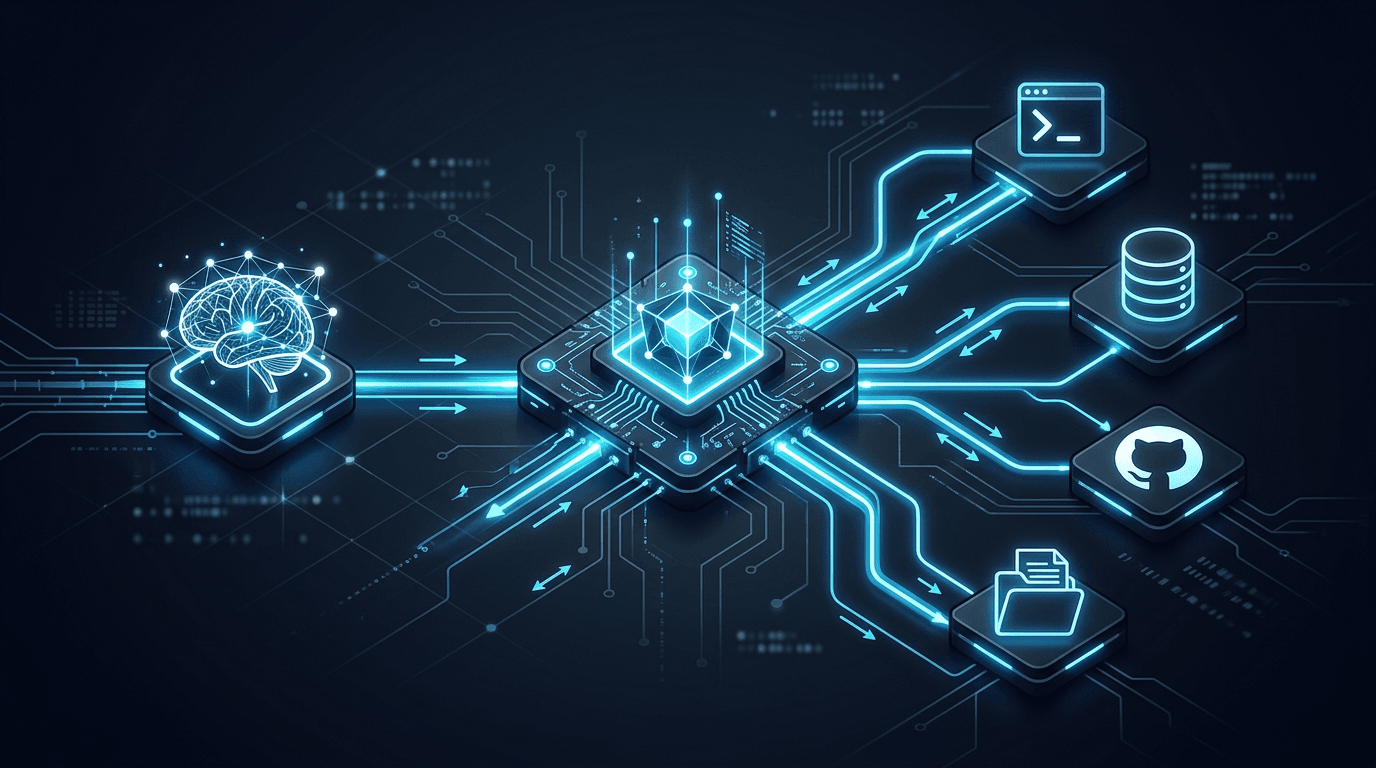
As reasoning agents become more sophisticated, they'll invoke sequences of services to accomplish complex tasks. Your app should be ready to participate in multi-step workflows where:
- You receive context from previous steps
- You execute your capability
- You return structured results for subsequent steps
- You handle errors gracefully so the agent can adapt
This is agentic AI in action—and your app needs to be a good citizen in that ecosystem.
Invest in Your API Like It's Your Product
In the app store era, your app was the product. In the AI era, your API increasingly is the product. This means:
- First-class API documentation
- Consistent, intuitive endpoint design
- Robust error handling and status reporting
- Fast, reliable performance
- Clear pricing models for AI consumption
Create Moats That AI Can't Replicate
If your entire value proposition can be replicated by a general AI assistant, you have a problem. The sustainable moats in the AI era are:
- Proprietary data: Unique information that AI systems need but can't generate
- Real-world integration: Connections to physical systems, logistics, inventory
- Trust and compliance: Regulatory approval, security certifications, established credibility
- Network effects: Value that increases with more users/participants
- Experience depth: Immersive interactions that transcend text
The Timeline: Faster Than You Think
This transition won't take decades. Key milestones are already happening:
Recent (2024-2025):
- ChatGPT and Claude integrated with external services via plugins, function calling, and MCP (Model Context Protocol)
- Enterprises built AI orchestration layers over internal tools
- Voice assistants became genuinely useful for multi-step tasks
Now (2025-2026):
- Major app store categories (travel, local services, utilities) seeing significant traffic shift to AI interfaces
- AI-first companies outcompeting traditional apps in key verticals
- MCP (Model Context Protocol) emerging as a standard for AI-to-service connectivity
- Developer tools prioritize "AI compatibility" alongside mobile/web
Medium-term (2027-2030):
- Most routine digital tasks mediated by AI assistants
- App stores remain but primarily for experience apps
- New generation of users never learns traditional app navigation
The winners will be those who embrace this shift early, designing for AI collaboration rather than resisting the tide.
Key Takeaways
- The app store paradigm is fragmenting as AI becomes the universal interface layer between users and digital services
- Apps are stratifying into infrastructure (API services for AI), super apps (unified AI-orchestrated ecosystems), and experiences (irreducible interactive products)
- AI discoverability is the new SEO—if AI can't find and invoke your service, users won't either
- Developers should think "capability, not destination"—building composable, well-documented services that AI can orchestrate
- The transition is fast—companies that wait to adapt will find themselves invisible to an AI-mediated user base
- Sustainable moats come from proprietary data, real-world integration, trust, network effects, and deep experience
What This Means for You
Whether you're a developer, product manager, or entrepreneur, the AI-first transition demands action now:
- Audit your app for AI compatibility—can an AI understand and invoke your core capabilities?
- Invest in API quality as aggressively as you invest in UX
- Design for orchestration—your app should play well with others
- Identify your AI-proof moat—what value do you provide that AI can't replicate?
- Watch the early adopters—companies integrating with ChatGPT, building on Claude, and deploying AI agents are writing the playbook
The app as we knew it—an isolated island of functionality behind a colorful icon—is becoming a relic. In its place: a world where intent flows freely, where AI orchestrates services on your behalf, and where the best software is the software you never have to think about using.
The future of apps isn't an app at all. It's the invisible layer that makes everything just... work.
Ready to understand the technology powering this shift? Explore how reasoning works in LLMs, discover AI-native software design, and learn about agentic AI and autonomous agents.