Google's Universal Commerce Protocol (UCP): Developer Guide and Integration
A practical guide to Google's UCP, the open standard for agentic commerce. Learn how to integrate AI-powered checkout into your products, what architectural decisions to consider, and where the opportunities lie.
Introduction
Google announced the Universal Commerce Protocol (UCP) on January 11, 2026: an open standard that lets AI agents execute purchases on behalf of users. For developers building AI products and product owners planning roadmaps, this isn't just news. It's a new primitive to build with.
Traffic from generative AI Tools to seller sites grew 693.4% last holiday season, according to Adobe. UCP is Google's answer to the question: what happens when AI agents need to actually complete transactions, not just recommend products?
This article breaks down what UCP means for your stack, your product, and your integration strategy.
The Core Problem UCP Solves
Today, if you're building an AI agent that needs commerce capabilities, you face a fragmented landscape:
- Each merchant has different APIs, authentication flows, and checkout processes
- Payment handling requires separate integrations per provider
- There's no standard way for agents to communicate purchase intent, handle cart state, or manage post-purchase flows
UCP standardizes this. One protocol, consistent interface, works across merchants who adopt it.
Technical Architecture
Transport Options
UCP supports two transport mechanisms:
Transport | Use Case | When to Choose |
|---|---|---|
REST API | Traditional server-to-server integration | You have existing REST infrastructure, need fine-grained control |
MCP Binding | Native integration with MCP-compatible agents | You're building on Claude, GPT, or other MCP-enabled models |
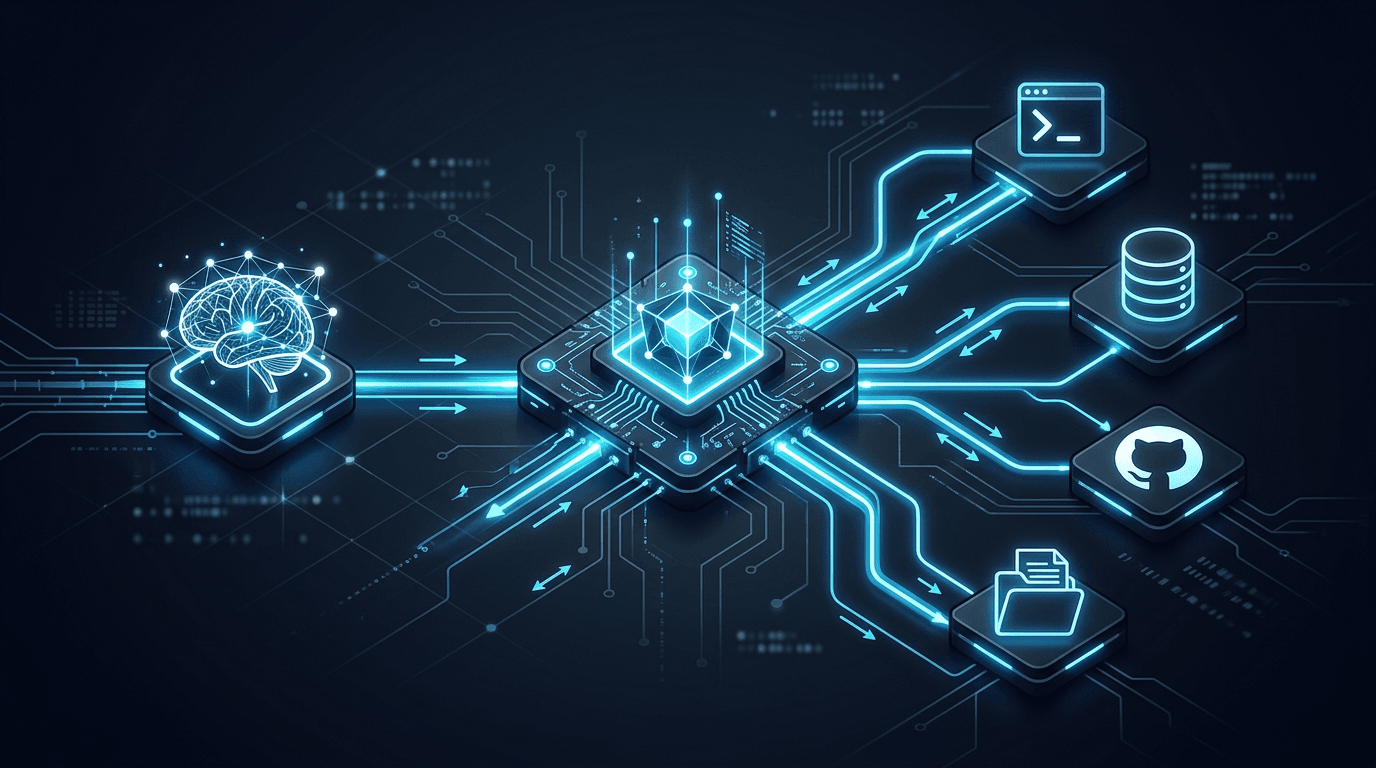
The MCP binding is particularly significant. If you're already using Model Context Protocol for tool use in your agents, UCP becomes another tool your agent can invoke with no separate integration path needed.
Protocol Interoperability
UCP doesn't exist in isolation. It's designed to work with:
- Agent2Agent (A2A): For multi-agent workflows where a shopping agent hands off to a payment agent
- Agent Payments Protocol (AP2): For payment-specific flows between agents and payment providers
- Model Context Protocol (MCP): For tool invocation and context sharing
This matters for product architects designing multi-agent systems. You can compose UCP with other protocols rather than treating commerce as a monolithic capability.
Integration Paths for Merchants
If you're on the merchant side, two implementation options:
Native Checkout
- Direct integration with Google's AI systems
- Lower friction for users (no redirects)
- Best for: Standard checkout flows, high-volume merchants
Embedded Checkout
- iframe-based solution
- Preserves your existing checkout UI and logic
- Best for: Complex workflows, custom branding requirements, regulated industries needing specific compliance flows
For Developers: How to Integrate
If You're Building AI Agents
UCP exposes commerce as a capability your agent can invoke. The key primitives:
- Product Discovery: Query available products based on user intent
- Cart Management: Add/remove items, handle quantities
- Checkout Initiation: Trigger the purchase flow with user confirmation
- Order Status: Track fulfillment, handle returns
With MCP binding, these become tools in your agent's toolkit:
Agent receives: "Buy me running shoes under $150"
Agent invokes: UCP product search → UCP add to cart → UCP checkout
User confirms: Payment via Google Pay
Agent receives: Order confirmation, tracking info
If You're Building E-commerce Platforms
The opportunity is enabling your merchants for agentic commerce without each one doing custom work:
- Implement UCP at the platform level
- Expose it as a feature flag or tier for merchants
- Handle the credential provider integration (Google Pay, soon PayPal) once
- Your merchants get AI-commerce-ready without individual integrations
This is likely why Shopify was a launch partner. They can roll this out across their merchant base.
SDKs and Resources
Google provides native SDKs across multiple languages. Check the UCP Developer Guide for:
- SDK downloads and documentation
- API reference
- Sandbox environment for testing
- Sample implementations
For Product Owners: Strategic Considerations
Should You Prioritize UCP Integration?
Consider these factors:
Factor | Signals to Prioritize | Signals to Wait |
|---|---|---|
User behavior | Users already interact via AI assistants | Primary traffic is direct/search |
Product type | Commodity goods, replenishment purchases | High-consideration, complex configuration |
Competitive pressure | Competitors enabling AI checkout | Market still in discovery phase |
Technical readiness | Modern API infrastructure, existing payment tokenization | Legacy systems, custom payment flows |
The Merchant of Record Question
A critical detail: merchants remain Merchant of Record for all UCP transactions. This means:
- You own the customer relationship
- You control customer data
- You handle fulfillment and support
- You retain promotional control (can offer discounts during AI recommendations)
This is different from marketplace models where the platform owns the transaction. UCP is a protocol, not a middleman.
Competitive Landscape
Google isn't alone here:
Player | Approach | Status |
|---|---|---|
Google (UCP) | Open protocol, MCP-compatible, Google Pay | Live with Waitlist |
OpenAI (Instant Checkout) | ChatGPT-native, Stripe integration | Live since Oct 2025 |
Shopify | Supporting both, platform-level integration | UCP launch partner |
Product decision: Do you integrate with one, both, or wait for consolidation? Given UCP's MCP compatibility, teams already invested in MCP-based agents have a natural path. OpenAI's approach is tighter to ChatGPT specifically.
Use Cases Worth Exploring
1. Reorder and Replenishment Agents
Low-hanging fruit. Users say "reorder my usual coffee" and the agent handles it.
Why it works with UCP: Simple product lookup, saved preferences, one-click confirmation flow.
2. Comparison Shopping Agents
Agent searches across UCP-enabled merchants, presents options, executes purchase on user's choice.
Why it works with UCP: Standardized product data, consistent checkout flow regardless of merchant.
3. Gift and Occasion Assistants
User says "Send my mom flowers for her birthday" and the agent handles product selection, address lookup, checkout, and scheduling.
Why it works with UCP: End-to-end transaction without user needing to visit any merchant site.
4. B2B Procurement Agents
Internal agents that handle routine procurement within approved vendor lists and budget constraints.
Why it works with UCP: Programmatic purchasing with audit trail, integrates with existing approval workflows via A2A.
What's Coming Next
Google's announced roadmap includes:
- Multi-item carts: Currently limited; full cart support coming
- Account linking: Connect loyalty programs, enable personalized pricing
- Post-purchase support: Tracking, returns, customer service handoffs
- Additional credential providers: Beyond Google Pay and PayPal
For product planning purposes, the multi-item cart and loyalty linking are the features that will unlock more complex use cases.
Final Thoughts
UCP is infrastructure for a future where a meaningful percentage of commerce flows through AI agents rather than traditional browse-and-buy. The protocol itself is straightforward. The strategic question is timing.
For developers building AI agents: UCP (especially via MCP binding) gives you commerce capabilities without building merchant-by-merchant integrations. It's a capability accelerator.
For product owners at merchants/platforms: The decision is whether agent-originated commerce is material to your business today or a 12-month bet. The integration isn't trivial, but the Shopify/major retailer adoption signals this is moving from experiment to expectation.
For everyone: Watch the MCP ecosystem. UCP's compatibility there means the same agents handling knowledge work could soon handle purchasing. The lines between assistant and commerce platform are blurring.